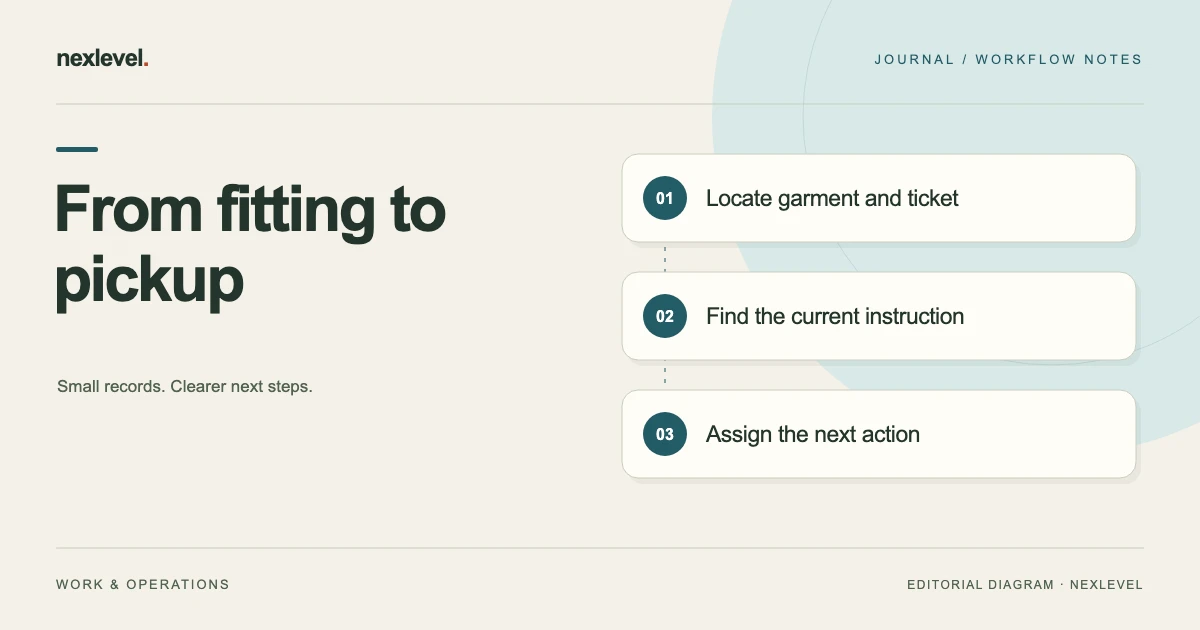
An alteration handoff should let the next person locate the garment, identify the current instruction and see what must happen before fitting or pickup. Prepare the ticket and physical item together; a short verbal summary cannot carry the whole history.
Prepare the handoff packet
- Confirm the ticket, every garment and any separately tracked accessory.
- Point to the current fitting reference and approved instruction version.
- List unanswered questions with an owner instead of implying permission to proceed.
- Check completion, payment and collection arrangements as separate items.
Working fields:
Ticket/garment | Current fitting | Instruction version | Open question | Next owner | Collection arrangement
Useful next steps: Check garment identity across the records, Separate proposed and approved work.
Start by locating the garment and ticket together
Read the order reference on the ticket and compare it with the physical item identification used by the studio. Include the garment description, item count, and current storage or work location.
If an order contains several items, identify which instruction belongs to which one. A shared customer name does not make a jacket, trousers, and loose belt interchangeable parts of the record.
Record any location uncertainty before handing over the next action. A neat task list is difficult to use when the recipient cannot establish which physical garment it concerns.
Name the handoff purpose and cutoff
State whether the recipient is continuing production, conducting another fitting, checking finished work, or handling collection. Each purpose needs different context from the same ticket.
Record the date and relevant cutoff for the handoff. New customer messages or work completed afterward should be identifiable as later updates, not assumed to have been included in the original summary.
Name the person responsible for the next action under the actual studio arrangement. Receiving the ticket for collection cover need not mean taking over every technical or customer decision.
Make the current instruction easy to find
Identify the latest relevant work instruction and its source. Keep earlier fitting observations or superseded notes distinguishable rather than leaving several measurements and comments competing in one field.
Where an instruction depends on another fitting or answer, record that condition. A proposed change should not look like an agreed instruction simply because it is the most recent note on the ticket.
Use the studio’s actual clarification process for ambiguity. The worksheet organizes the next question; it does not determine a garment alteration or substitute for professional fitting judgment.
Preserve the fitting history
Keep each fitting event identifiable by its context and relevant observations. Record what was checked, what changed, and what remained open through the actual workflow.
A later fitting may refine an earlier note without making the earlier event disappear. The recipient should be able to understand the sequence when it matters to the current instruction.
Separate source observations from interpretation. If a customer raised a question, preserve that status until the relevant person records what was actually decided.
Use a fitting-to-pickup worksheet
Useful fields include order reference, garment and item count, location, handoff purpose, current stage, instruction source, latest fitting, open questions, next action, next event, responsible person, payment summary, and pickup-record status.
Keep a short source reference behind each consequential statement. A concise handoff can remain readable while allowing someone to locate the full fitting note or customer discussion.
Add a receipt check showing what the recipient actually located and understood. Acknowledging the handoff is separate from completing the alteration or confirming customer collection.
Work through a fictional jacket handoff
Imagine order A314 for a jacket. The ticket records an initial sleeve discussion, a later fitting note, and a further customer question that has not yet been resolved. The jacket is on the fitting rail, not the ready-for-collection rail.
The handoff summary names the later fitting as the current reference and identifies the remaining question. It assigns the counter lead to clarify the instruction through the studio’s normal process before the affected work continues.
The recipient does not infer that the jacket is ready because the original due date appears on the ticket. The physical location, current stage, instruction, and next action tell a more specific story.
Keep completion and pickup readiness distinct
Record what work has actually been completed and what checking remains. A garment can have production work finished while a final inspection or customer arrangement is still pending.
Use the studio’s own criteria and responsible professional process for readiness. This article does not establish when an alteration is technically satisfactory or when a customer must accept it.
Make the current state legible for the person covering the counter. They should not need to interpret an old fitting note as proof that every later step has occurred.
Reconcile payment information before collection cover
Keep the recorded agreed amount, deposits, later payments, and any unresolved adjustment identifiable. A balance should be reproducible from its components through the actual business process.
For a fictional price of 95 currency units and a recorded deposit of 35, the simple remaining amount is 60 before any other recorded change. The figures are invented, not a pricing recommendation.
If the current record differs, identify the source question rather than changing a number to make collection easier. A payment note is separate from the technical work status.
Prepare a clear collection summary
Identify the order, garments or accessories expected at pickup, relevant collection arrangement, and the actual receipt or record to use. Keep the final item count connected to the physical handover.
State any question the counter person should refer to the responsible colleague. Avoid putting them in the position of reconstructing an unresolved instruction from a short customer message.
Record actual pickup only after it occurs through the supported workflow. A prepared receipt or planned appointment does not establish that the garment has left the studio.
Handle a changed instruction during the handoff
If new information arrives, identify the affected order and source event. Tell the next responsible person through the studio’s chosen coordination method and update the working record appropriately.
Keep the new proposal or clarification distinguishable from earlier agreed work. Do not silently rewrite the old note so the history appears to have always contained the new instruction.
Check whether the change affects the next fitting, remaining effort, customer arrangement, or payment record. Each effect needs its own source or decision rather than a blanket assumption.
Use deliberate copies for temporary cover
If a colleague receives a portable summary, inspect what it contains and which information remains in the main ticket. A shared document should not be mistaken for a live synchronized workspace unless the tool actually supports that behavior.
Include the cutoff and the route to the current record. If the portable copy becomes outdated, identify the change clearly instead of leaving two different current-looking instructions.
Keep customer details within the intended privacy and access arrangement. A counter cover sheet may need less information than the full retained fitting history.
Test the handoff without reconstructing it aloud
Ask the recipient to locate the garment, name the current instruction, identify the open question, and state the next event. They should be able to do so from the record and actual studio arrangement.
For A314, they should recognize that the jacket is awaiting clarification rather than ready for collection. If they infer readiness from the due date alone, improve the stage and next-action wording.
Record the specific ambiguity and fix it. This tests whether the handoff is usable; it does not independently validate the quality of every alteration.
Return temporary responsibility with a short update
At the end of cover, record what happened, what sources or payments changed, and which questions remain. Name the next owner and cutoff just as in the original handoff.
If no action occurred, state that plainly. The returning colleague should not infer progress merely because the ticket moved or another person opened the file.
Use the actual events to improve the worksheet. A missing item-count field or unclear collection arrangement can become a specific check in the next transfer.
Keep an example handoff entry
A fictional entry can say: “A314 jacket; one garment; fitting rail; current reference is fitting F2; customer question Q3 remains open; counter lead to clarify before the affected work proceeds. Collection readiness not recorded. Payment summary checked separately.”
Add the relevant source locations and cutoff in your actual record. The short entry should lead to the detailed ticket without pretending to contain every technical observation.
If the instruction is later clarified, record that outcome and the new next action. Preserve why the earlier handoff contained a question rather than a definite production instruction.
Check a multi-item collection case
Imagine a second fictional order, A315, containing trousers and a loose belt supplied with them. The studio’s physical count is one garment and one accessory. The handoff should make both references visible even if the alteration concerns only the trousers.
The collection-cover colleague locates the trousers on the ready rail but cannot find the belt. The useful next action is to check the recorded storage reference through the studio’s actual handling process. A prepared pickup receipt does not resolve the missing physical-item question.
Record the result and the person responsible for the check. Do not mark the whole order collected merely because one component was handed over or because the customer has arrived. Use the actual studio procedure for partial handover or another arrangement, keeping the record accurate about what occurred.
After the issue is resolved, update the source location or count reference so the next colleague can understand the event. This example illustrates record coordination, not a universal legal rule for custody. The same worksheet can be adapted to a jacket with a detachable accessory or several separately labeled items when the actual ticket and process support that arrangement.
Check an unconfirmed collection change
A third fictional ticket, A316, has a recorded collection arrangement. A later message says the customer might attend on another day. Keep that proposal identifiable rather than replacing the existing arrangement as though the new date had been confirmed.
The handoff can state the current recorded arrangement, the later message reference, and the person who will clarify it. This lets the counter team prepare without presenting an uncertain plan as a customer promise.
If clarification changes the event, record the result and inspect any maintained reminder or calendar copy. A local pickup prompt and a paper diary may need separate attention through the actual workflow. The recipient should know which one is the current reference.
Before closing cover, ask three practical questions: can the next person locate every physical item, identify the latest supported work instruction, and explain the next confirmed event or open question? A yes should be based on the actual record and item check. Where an answer remains uncertain, preserve the uncertainty and owner rather than leaving the next shift to reconstruct the conversation again.
Keep the completed handoff check with the relevant ticket or source reference under the studio’s actual arrangement. If the same ambiguity recurs, improve the field that caused it rather than adding another disconnected list. A clear garment count, current-instruction reference, and named next action can make the next transfer easier to inspect. The handoff remains a working record of what is known, including any question that still needs the responsible person’s attention.
Use AlterationTicket as the connected record
AlterationTicket keeps garment details, measurements, fitting history, payments, approval snapshots, and pickup records together. Its current listing describes optional pickup reminders and deliberate receipt sharing.
Use the actual supported workflow and studio process for any handoff. Check current capabilities and plan details in the official AlterationTicket App Store listing, and keep the physical garment connected to a clear current instruction.